Hydraulic Network Modeling and Simulation
Intelligent Simulation, Planning and Optimization of Utility Networks
Whether for network analysis, expansion planning or rehabilitation projects, we help you design efficient, reliable and sustainable utility systems.
By applying advanced methods for the modeling and analysis of hydraulic flow and transport processes, we deliver sound engineering insights and practical solutions. From data preparation and model development to detailed simulations and performance assessments, we provide comprehensive support throughout the entire lifecycle of your hydraulic network model.
Inquiry
We would be pleased to support you with the implementation and development of a hydraulic network model. Please contact us using the contact form or get in touch with us directly by phone.

With many years of experience in hydraulic network modeling for gas, water, district heating and steam systems, we offer fast and professional analysis of your existing network data before model creation.
This analysis forms the basis for the development of efficient data interfaces and contributes significantly to the quality assurance and reliability of your existing data, ensuring a solid foundation for accurate hydraulic network models.
Reliable hydraulic network models require reliable data. To ensure seamless and loss-free data transfer, we develop customized interfaces between GIS, billing systems and hydraulic modeling software.
Working closely with our clients, we create flexible and efficient data interfaces that are specifically designed to meet individual requirements. Once implemented, these interfaces can be independently managed and adapted by users, providing a sustainable and future-proof solution for ongoing network modeling activities.
After data import, all network data undergoes a rigorous quality assurance process. The imported information is checked against the network analysis software’s node-edge data model to ensure completeness, consistency and topological correctness.
Through seamless GIS integration, topological errors and inconsistencies can be detected, documented and efficiently resolved within the existing data. As a result, both the hydraulic network model and the underlying GIS database benefit from significantly improved data quality and reliability.
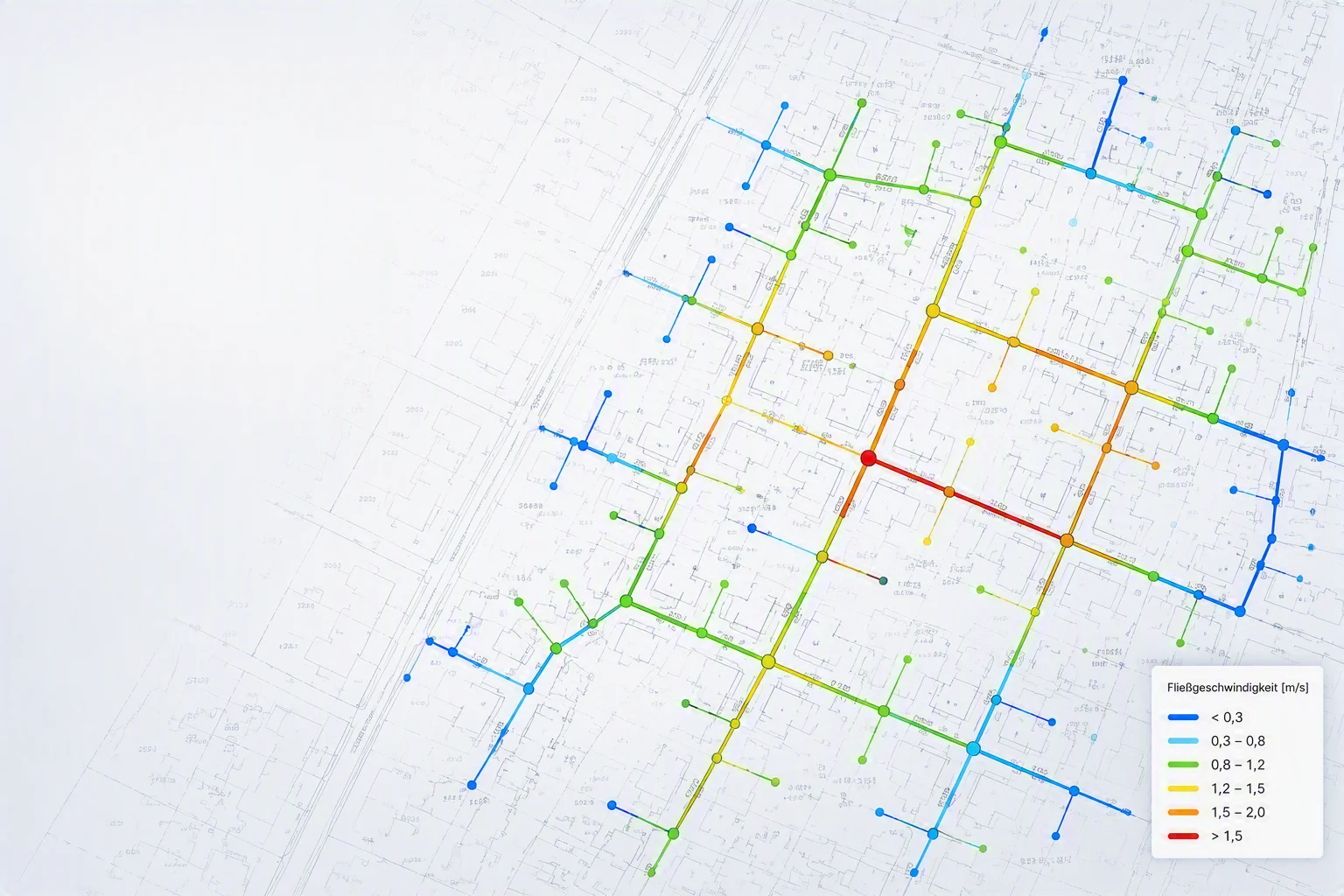
With a simulation-ready network model, you gain access to extensive analysis and planning capabilities. New connections, network expansions and operational scenarios can be evaluated and optimized with confidence.
Using measured field data to validate simulation results, the model can be continuously refined and calibrated, ensuring a realistic representation of the network and providing a reliable basis for informed engineering decisions.
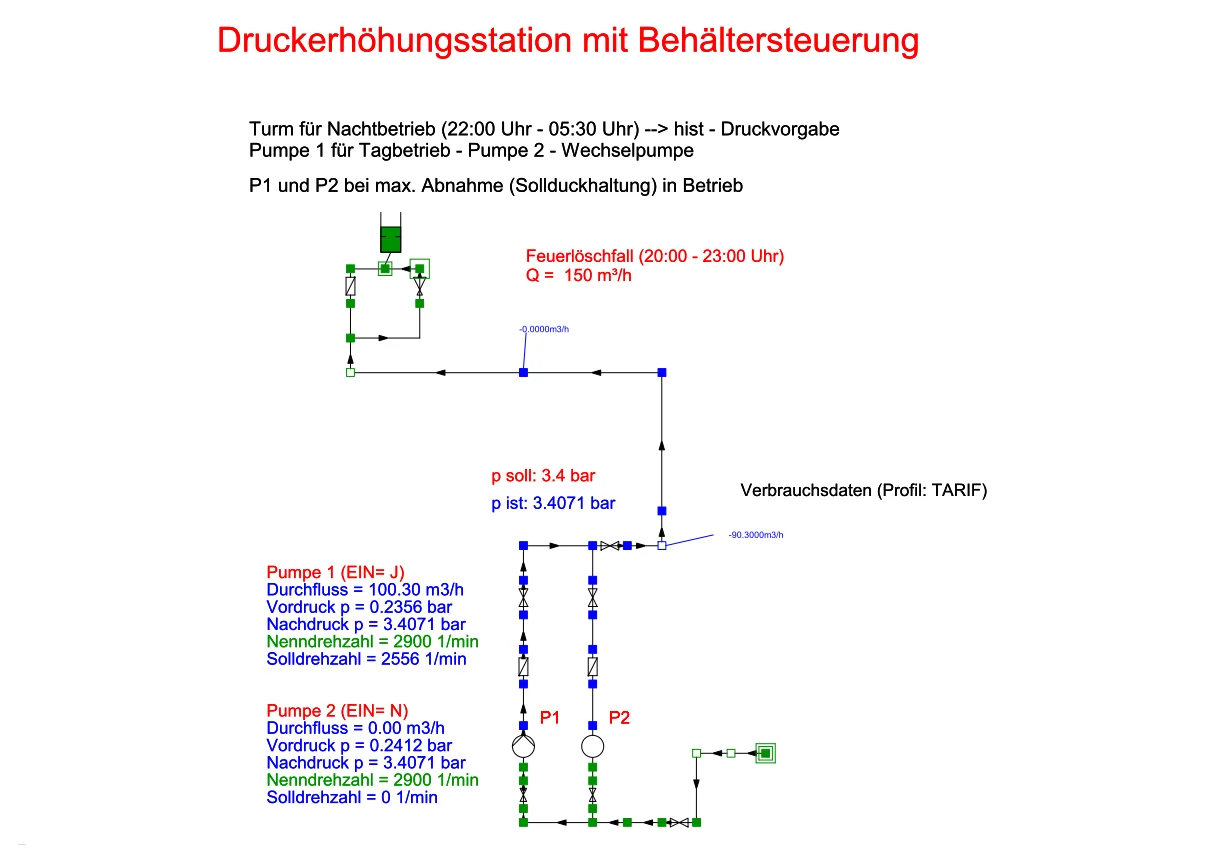
Control and scripting capabilities allow the accurate representation of the operational behavior of critical network assets, including pressure control facilities, pumping stations and storage systems. As a result, complex operating scenarios, control strategies and facility interactions can be modeled realistically within the hydraulic network model.
This enables comprehensive analyses of system performance and supports the optimization of network operations under real-world conditions.